
Important NCERT Diagram For NEET UG 2026 (Day 16): This is one of the most important diagrams in the entire NEET Biology syllabus. It clearly shows how chromosome behaviour differs between mitosis (equational division) and meiosis (reductional division). Mastering this single diagram can help you score 2-4 marks directly in the exam.
Quick Overview of the Processes
- Mitosis (left side of diagram): Occurs in somatic cells. DNA replicates once → one division → 2 genetically identical diploid (2n) daughter cells.
- Meiosis (right side of diagram): Occurs in germ cells. DNA replicates once → two divisions (Meiosis I & II) → 4 genetically different haploid (n) daughter cells.
Chromosome Behaviour – Key Differences
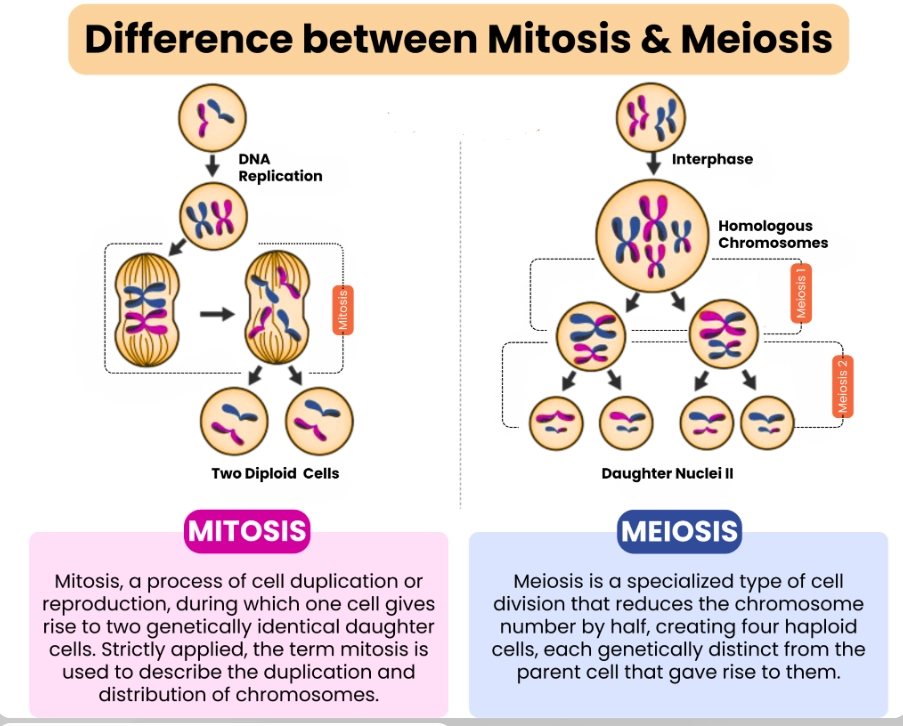
| Feature | Mitosis (Left Side) | Meiosis (Right Side) |
|---|---|---|
| Number of Divisions | 1 division | 2 divisions (I = reductional, II = equational) |
| Daughter Cells | 2 diploid (2n), genetically identical | 4 haploid (n), genetically different |
| Chromosome Pairing | No pairing of homologous chromosomes | Homologous chromosomes pair (synapsis) in Prophase I |
| Crossing Over | Absent | Present in Prophase I (creates genetic variation) |
| Chromosome Separation | Sister chromatids separate in Anaphase | Homologous chromosomes separate in Anaphase I; sister chromatids separate in Anaphase II |
| DNA Replication | Occurs once before division | Occurs once before Meiosis I (no replication before II) |
Important Points to Remember
- Mitosis maintains chromosome number (2n → 2n) → essential for growth and repair.
- Meiosis halves chromosome number (2n → n) → prevents doubling of chromosomes in every generation during sexual reproduction.
- Genetic variation is zero in mitosis (except rare mutations) but maximum in meiosis due to crossing over + independent assortment.
- Meiosis I is called reductional because chromosome number is reduced; Meiosis II is equational (similar to mitosis).
- In the diagram, notice the homologous chromosomes are only visible and paired in the meiosis side – this is a super high-yield spotting point.
Functions of Mitosis and Meiosis
- Functions of Mitosis:
- Growth and development of the organism.
- Repair and replacement of worn-out cells.
- Asexual reproduction in unicellular organisms (e.g., Amoeba, bacteria).
- Regeneration of lost body parts (e.g., in Planaria, Hydra).
- Functions of Meiosis:
- Formation of haploid gametes (sperm and ova) in animals / spores in plants.
- Maintains constant chromosome number across generations.
- Introduces genetic diversity → raw material for natural selection and evolution.
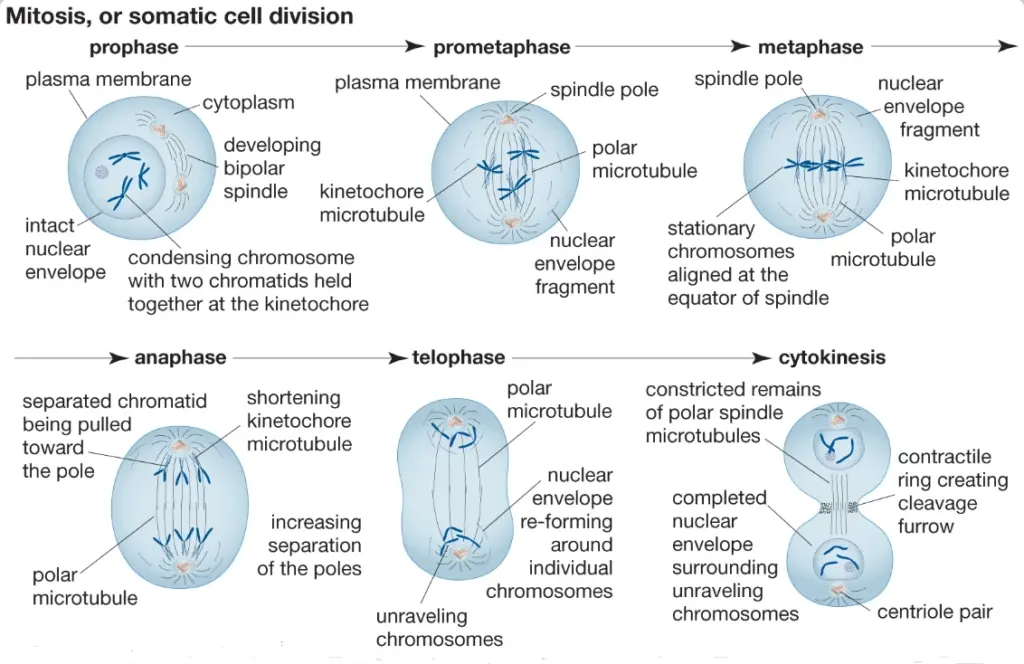
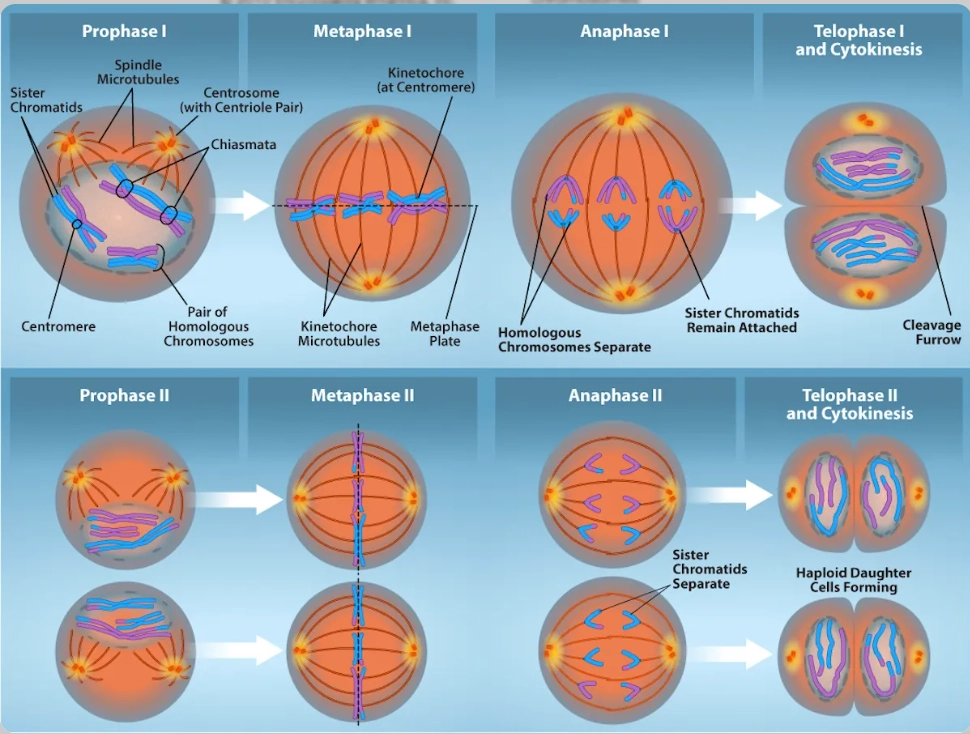
Stage-wise Chromosome Behaviour
Mitosis Stages (Chromosome Behaviour)
Meiosis Stages (Chromosome Behaviour – Focus on Crossing Over & Separation)
Practice Questions
Q.1. Refer to the main comparison diagram: The process shown on the right side produces four cells that are:
a) Diploid and genetically identical
b) Haploid and genetically identical

c) Haploid and genetically different
d) Diploid and genetically different
Q.2. In the meiosis portion of the diagram, the separation of homologous chromosomes occurs during:
a) Metaphase II
b) Anaphase I
c) Anaphase II
d) Telophase I
Q.3. From the given diagram, which feature is seen only in meiosis and not in mitosis?
a) DNA replication
b) Formation of two daughter cells
c) Pairing of homologous chromosomes
d) Separation of sister chromatids
Q.4. Observe the chromosome behaviour in the diagram: The number of chromosomes is halved only in:
a) Mitosis
b) Meiosis I
c) Meiosis II
d) Both Meiosis I and II
Q.5. Diagram-based assertion-reason type:
Assertion: The cells produced in the right side of the diagram show genetic variation.
Reason: Crossing over occurs during Prophase I of meiosis.
a) Both A and R are true and R is correct explanation of A
b) Both true but R is not explanation
c) A true, R false
d) A false, R true
Comment Below For Answers!!
These diagrams often form the foundation of direct and application-based questions in NEET. Make it a habit to revise them regularly, label them without looking, and connect them with concepts. With consistent practice, these visuals can become your strongest scoring tool. Stay focused, keep revising, and you’re one step closer to your NEET 2026 goal!
All The Best!
