
Important NEET UG Diagrams Day 12:Diagrams play a crucial role in cracking NEET UG 2026, especially in Biology, where visual memory can boost both speed and accuracy. On Day 12, we bring you carefully selected, high-yield diagrams that are frequently asked in previous years’ papers and mock tests. Mastering these diagrams not only strengthens your conceptual clarity but also helps you tackle tricky MCQs with confidence. Let’s simplify complex structures into easy-to-remember visuals and take one more strong step toward your medical dream!
Types of Bacteria
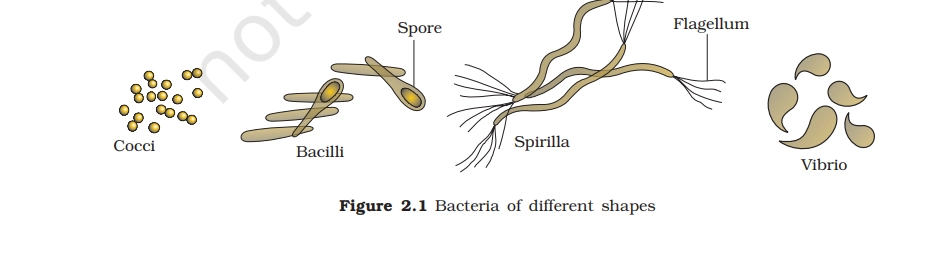
1. Cocci
Definition:
Cocci are spherical or oval-shaped bacteria.
Key Feature:
They may occur singly or in groups such as:
- Diplococci (pairs)
- Streptococci (chains)
- Staphylococci (clusters)
2. Bacilli
Definition:
Bacilli are rod-shaped bacteria.
Key Feature:
- May occur singly or in chains.
- Some bacilli can form endospores under unfavorable conditions.
3. Spirilla
Definition:
Spirilla are spiral-shaped (helical) bacteria.
Key Feature:
- Usually rigid.
- Often possess flagella for movement.
4. Vibrio
Definition:
Vibrio are comma-shaped bacteria.
Key Feature:
- Curved rod-like structure.
- Mostly aquatic and motile.
| Part | Main Function | Importance |
|---|---|---|
| Spore | Survival structure | Protects bacteria in harsh conditions |
| Flagellum | Movement | Helps in locomotion and infection |
PRACTICE QUESTIONS
Q.1. On which primary basis did early bacteriologists classify bacteria into cocci, bacilli, and spirilla?
A. Mode of nutrition
B. Gram staining reaction
C. Genetic relatedness
D. Shape (morphology)
Q.2. Which feature is most directly responsible for a bacterium being Gram-positive in a Gram stain?
A. Absence of peptidoglycan in the cell wall
B. Presence of an outer membrane rich in lipopolysaccharide
C. Thick peptidoglycan layer in the cell wall
D. High content of sterols in the plasma membrane
Q.3. Mycoplasma cannot be classified as Gram-positive or Gram-negative in the usual way because they lack which component?
A. DNA
B. Ribosomes
C. Cell wall peptidoglycan
D. Plasma membrane
Q.4. Which pair correctly matches the type of oxygen requirement with an appropriate bacterial example?
A. Obligate anaerobe – Mycobacterium tuberculosis
B. Facultative anaerobe – Escherichia coli
C. Obligate aerobe – Clostridium tetani
D. Microaerophile – Staphylococcus aureus
Consistency is the secret weapon for NEET success. By revising these important diagrams daily, you build a strong visual foundation that can help you score higher with less confusion in the exam hall. Keep practicing, keep revising, and don’t forget to test yourself regularly. Stay tuned for the next edition of Important NEET UG Diagrams as we continue helping you prepare smarter and aim higher. Your journey to a top medical college starts with disciplined daily effort!
Comment Below For Answers!!
Read Also: NEET UG 2026 Important Practice Questions (Day 30)
