
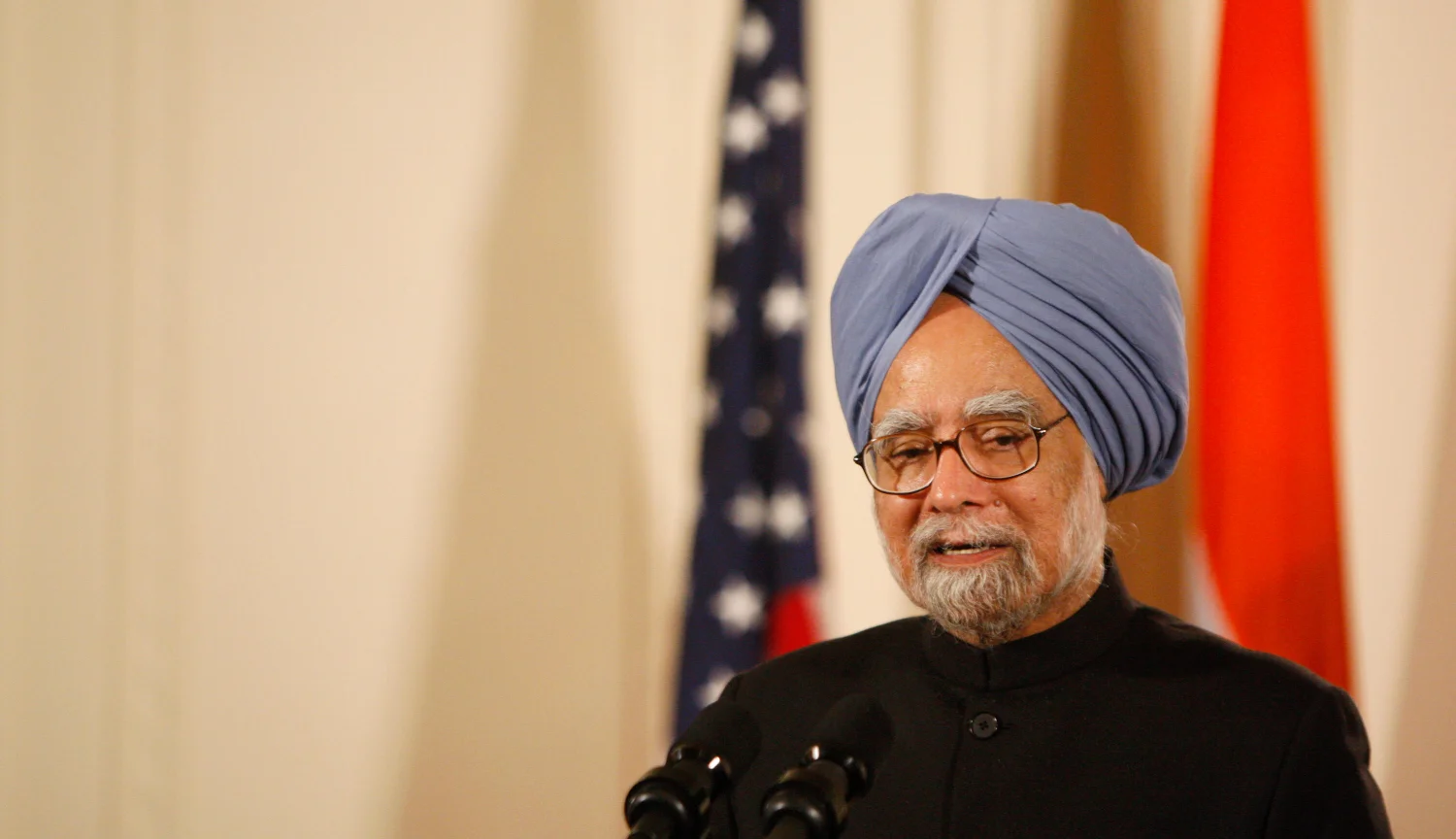
Dr. Manmohan Singh is one of India’s most respected leaders, known for his calm approach and his important role in shaping India’s economy. He served as India’s Prime Minister from 2004 to 2014. But behind his successful career lies a strong education that helped him become the leader he is today. Let’s take a look at Dr. Singh’s education journey and how it shaped his leadership.
Dr. Manmohan Singh’s Education Journey
| Level of Education | Institution | Degree/Field | Year/Period |
| Schooling | Government College, Gah (now in Pakistan) | Matriculation | 1948 |
| Intermediate | Hindu College, Amritsar | Intermediate (Pre-University) | Late 1940s |
| Undergraduate | Government College, Amritsar | Bachelor of Arts (Economics) | Early 1950s |
| Postgraduate | Punjab University, Chandigarh | Master of Arts (Economics) | 1954 |
| Doctoral Studies | University of Cambridge, UK | Doctor of Philosophy (PhD) in Economics | 1957 |
| Further Research | Nuffield College, University of Oxford, UK | Research in Economics | Early 1960s |
Dr. Manmohan Singh’s Notable Prizes and Awards
| Year | Award/Prize | Awarding Institution/Body | Significance |
| 1955 | Wright Prize | University of Cambridge | For distinguished performance in Economics. |
| 1956 | Adam Smith Prize | University of Cambridge | For his exceptional work in Economics. |
| 1987 | Padma Vibhushan | Government of India | The second-highest civilian award for his contributions to public service and economics. |
| 1993 | Finance Minister of the Year (Asia)** | Euromoney and Asiamoney | Recognized for his impactful economic reforms as Finance Minister of India. |
| 2002 | Outstanding Parliamentarian Award | Indian Parliamentary Group | Honored for his exemplary contributions in parliamentary debates and policymaking. |
| 2005 | Top 100 Influential People | Time Magazine | Listed among the most influential people globally for his role as an economic reformer and leader. |
| 2008 | Doctor of Letters (Honoris Causa) | Punjab University | Recognized for his scholarly and professional achievements. |
| 2009 | World Statesman Award | Appeal of Conscience Foundation, New York | For promoting peace, democracy, and international relations. |
| 2010 | Jawaharlal Nehru Fellowship Award | Jawaharlal Nehru Memorial Fund | Acknowledging his significant contributions to Indian society. |
Dr. Manmohan Singh’s Work journey
| Period | Position | Institution/Organization | Key Contributions |
| 1957-1965 | Economics Professor | Punjab University, Chandigarh | Taught economics and inspired students. |
| 1966-1969 | Economic Affairs Officer | UNCTAD (United Nations Conference on Trade and Development) | Focused on trade and development policies. |
| 1969-1971 | Advisor | Ministry of Foreign Trade, Government of India | Contributed to India’s export policies. |
| 1972-1976 | Chief Economic Advisor | Ministry of Finance, Government of India | Provided strategic economic advice to the government. |
| 1976-1980 | Director | Reserve Bank of India (RBI) | Oversaw policy-related research and operations. |
| 1980-1982 | Secretary General | South Commission, Geneva | Worked on development issues for Global South. |
| 1982-1985 | Governor | Reserve Bank of India | Played a key role in shaping monetary policies. |
| 1985-1987 | Deputy Chairman | Planning Commission | Planned and strategized national economic policies. |
| 1991-1996 | Finance Minister | Government of India | Initiated landmark economic reforms to liberalize India’s economy. |
| 1998-2004 | Leader of the Opposition | Rajya Sabha, Indian Parliament | Contributed to debates and policy discussions. |
| 2004-2014 | Prime Minister | Government of India | Led India through a period of economic growth and policy innovation. |
| Post-2014 | Member of Parliament (Rajya Sabha) | Indian Parliament | Continued to contribute to debates on national issues. |
UPDATED FOR 2026
NEET UG Counselling Guides 2026
State-wise MBBS/BDS Counselling Guide 2026
State-wise counselling & admission guidance
AACCC AYUSH NEET Counselling Guide 2026
AYUSH counselling & admission guidance
