

Most Important Biology Diagram For NEET UG 2026: Diagrams play a decisive role in NEET UG Biology, often turning conceptual clarity into guaranteed marks. Keeping this in mind, we bring you Most Important Biology Diagrams for NEET UG 2026 to Score 650+ (Day 3), a focused daily initiative designed to strengthen your visual memory and boost exam confidence. These handpicked NCERT-based diagrams are frequently asked in exams and help you revise complex topics quickly, accurately, and effectively.
1. STRUCTURE OF A SPERM
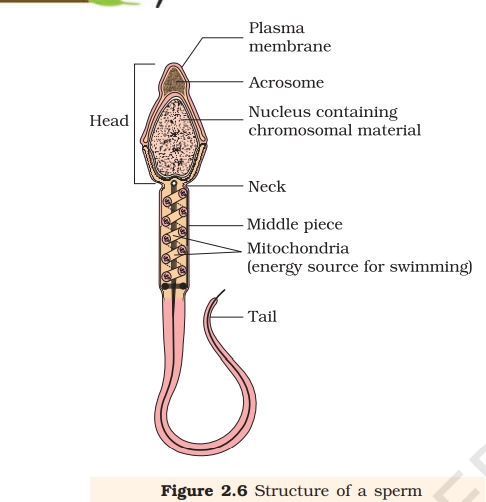
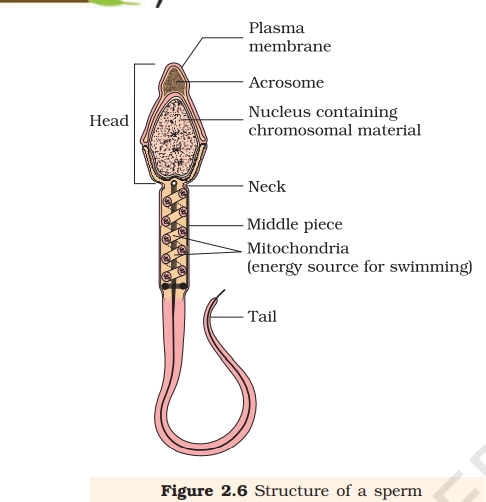
It is a microscopic structure composed of a head, neck, a middle piece and a tail. A plasma membrane envelops the whole body of sperm. The sperm head contains an elongated haploid nucleus, the anterior portion of which is covered by a cap-like structure, acrosome.
KEY POINTS TO REMEMBER
Head: Flat and oval, covered by plasma membrane; contains acrosome (anterior cap with enzymes for egg penetration) and nucleus (posterior, with haploid chromosomal material/DNA).
Neck: Short constricted region connecting head to middle piece; contains centrioles.
Middle piece: Cylindrical, packed with spirally arranged mitochondria (energy source via ATP for tail movement/swimming).
Tail: Long flagellum for propulsion; divided into principal piece (fibrous sheath around axoneme) and end piece.
Acrosome is formed from Golgi apparatus.
Middle piece contains mitochondria for motility.
Human sperm is haploid and motile.
Read Also: Most Important Biology Diagram For NEET UG 2026 to Score 650+ (Day 2)
PRACTICE QUESTIONS
Q.1. In the diagram of a human sperm cell, what is the main function of the acrosome located at the tip of the head?
A. To release enzymes that help penetrate the egg coverings
B. To protect the tail from mechanical damage
C. To store genetic information
D. To generate ATP for movement
Q.2. Which labeled part of the human sperm cell diagram primarily contains the paternal genetic material?
A. Middle piece with mitochondria
B. Neck region
C. Acrosome
D. Nucleus in the head
Q.3. In the labeled diagram, what is the main role of the mitochondria in the middle piece of the sperm cell?
A. Storing enzymes for the acrosome reaction
B. Protecting the sperm DNA from damage
C. Producing energy for flagellar movement
D. Carrying receptors that recognize the egg
Q.4. Which statement best describes the relationship between the middle piece and the tail of the sperm cell as shown in the diagram?
A. The middle piece controls genetic expression in the tail
B. The middle piece forms a rigid shield that stops the tail from bending too far
C. The middle piece supplies energy that powers the tail’s beating movement
D. The middle piece stores extra enzymes for the acrosome reaction
2. DIAGRAM OF MENSTRUAL CYCLE
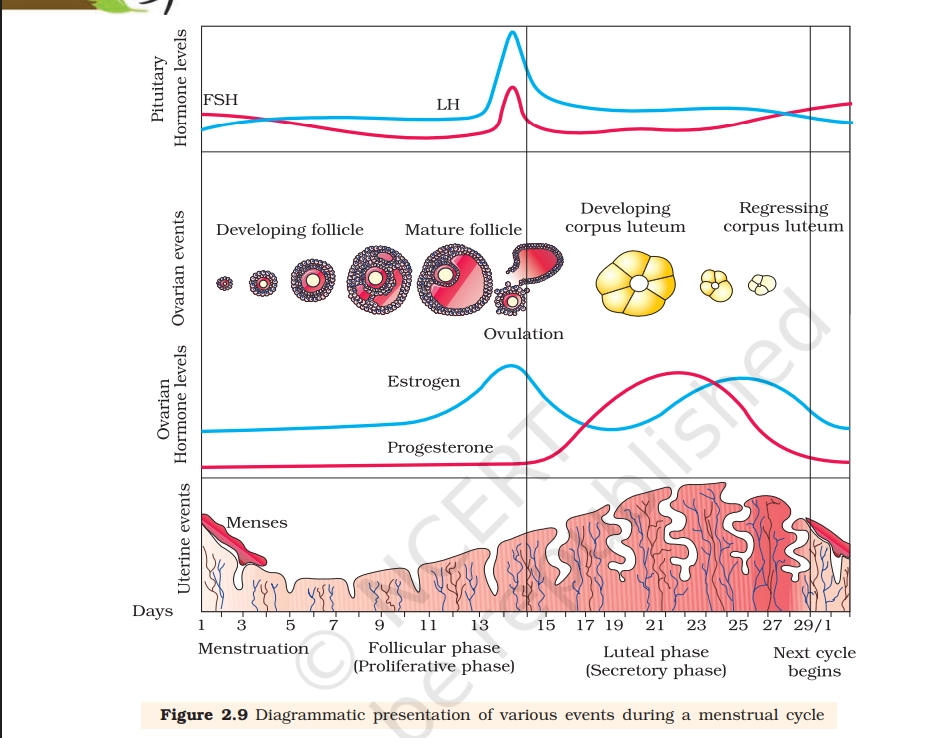
The menstrual cycle diagram typically shows a 28-day cycle with ovarian/uterine changes, hormone levels (FSH, LH, estrogen, progesterone), and phases like menstruation, follicular, ovulation, and luteal. Focus on timelines, hormone peaks, and endometrial/ovarian events.
KEY POINTS TO REMEMBER
Phases Timeline
- Menstrual phase (Days 1-5): Endometrium sheds (menstrual flow); low progesterone/estrogen; FSH starts rising
- Follicular phase (Days 1-13): FSH stimulates primary follicles to Graafian follicle; rising estrogen thickens endometrium (proliferative)
- Ovulatory phase (Day 14): LH surge bursts Graafian follicle, releasing ovum; estrogen peaks just before
- Luteal phase (Days 15-28): Corpus luteum forms, secretes progesterone (endometrium secretory); if no pregnancy, it degenerates, dropping hormones to restart cycle
Hormone Graph Key Peaks
- FSH: Rises early follicular, peaks mid-follicular.
- LH: Gradual rise, sharp mid-cycle surge (ovulation trigger).
- Estrogen: Gradual follicular rise, peak pre-ovulation; secondary luteal rise.
- Progesterone: Peaks post-ovulation in luteal phase.
PRACTICE QUESTIONS
Q.5. In a typical 28-day menstrual cycle, which pairing best matches the ovarian phase with the dominant hormone pattern shown in a hormone graph?
A. Follicular phase – high progesterone, low estrogen
B. Menstrual phase – peak estrogen and progesterone
C. Ovulatory phase – steadily high FSH with flat LH
D. Luteal phase – high progesterone, moderate estrogen
Q.6. On a diagram correlating ovarian and uterine (endometrial) changes, which uterine phase correctly matches the late follicular phase in the ovary?
A. Proliferative phase of endometrium
B. Menstrual phase of endometrium
C. Ischemic phase of endometrium throughout the follicular phase
D. Secretory phase of endometrium
Q.7. Which of the following is a common mistake when interpreting menstrual cycle graphs that align ovarian, uterine, and hormonal events?
A. Believing progesterone is highest just before menstruation, not in mid-luteal phase
B. Correctly matching corpus luteum activity with high progesterone levels
C. Thinking the proliferative phase of endometrium corresponds to the luteal phase
D. Assuming the LH surge occurs exactly at the start of menstruation
Q.8. A student studying a combined menstrual cycle diagram claims: “Ovulation occurs exactly at day 14 in all women, and luteal phase length varies widely.” Which correction, based on understanding of phase timing, is most appropriate for NEET preparation?
A. Both ovulation timing and luteal phase length are completely fixed
B.Ovulation timing can vary, but luteal phase length is relatively constant
C. Luteal phase is highly variable, but follicular phase is fixed at 14 days
D. Ovulation is always earlier than day 10, and luteal phase changes very little
Read Also: Most Important Biology Diagram For NEET UG 2026 to Score 650+
STRUCTURE OF AN OVARY
KEY POINTS TO REMEMBER
Follicular Stages
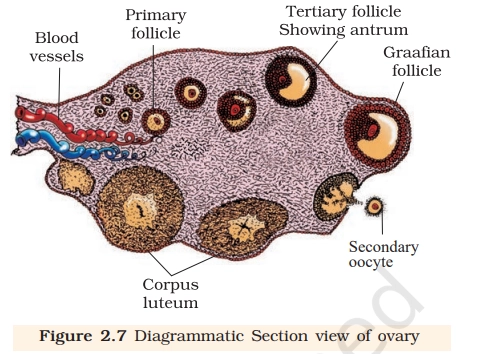
- P → T → G → CL
Primary → Tertiary → Graafian → Corpus luteum - Primary Follicle
- Contains primary oocyte
- Surrounded by single layer of follicular cells
- Found mostly in ovarian cortex
- Tertiary Follicle
- Appearance of antrum (fluid-filled cavity)
- Follicular cells differentiate into: Granulosa cells & Theca interna & externa
- Graafian Follicle
- Largest and mature follicle
- Ready for ovulation
- Contains secondary oocyte
- Large antrum present
- Secondary Oocyte
- Formed after completion of meiosis I
- Released during ovulation
- Meiosis II completes only after fertilization
Corpus Luteum
- Formed from ruptured Graafian follicle
- Secretes progesterone
- Maintains endometrium for pregnancy
PRACTICE QUESTIONS
Q.9. The structure in the ovary that releases the female gamete during ovulation is:
A. Primary follicle
B. Tertiary follicle
C. Graafian follicle
D. Corpus luteum
Q.10. The appearance of a fluid-filled cavity (antrum) is first seen in:
A. Primary follicle
B. Secondary follicle
C. Tertiary follicle
D. Graafian follicle
Consistent diagram practice can be a real score-booster in NEET UG Biology, especially when every mark matters for a 650+ target. By revising these high-yield biology diagrams daily, you reduce silly mistakes, improve labeling accuracy, and sharpen concept retention. Stay connected for upcoming diagram revisions, and make diagrams your strongest weapon on the road to NEET UG 2026 success.
ANSWERS
Ans.1. A. To release enzymes that help penetrate the egg coverings. The acrosome is formed from the Golgi apparatus during spermiogenesis and sits like a cap over the nucleus at the tip of the sperm head.
Ans. 2. D. The nucleus within the head of the sperm cell holds the paternal genetic material. It contains a haploid set of chromosomes, which is half the number found in somatic cells.
Ans.3. C. Producing energy for flagellar movement. The middle piece is characterized by a helical sheath of mitochondria wrapped around the initial segment of the tail. These mitochondria perform oxidative phosphorylation, generating large quantities of ATP needed for sustained sperm motility.
Ans.4. C. The middle piece supplies energy that powers the tail’s beating movement. The mitochondria in the middle piece wrap around the early part of the flagellum and supply ATP to the dynein motors that drive tail bending.
Ans.5. D. Luteal phase – high progesterone, moderate estrogen. After the LH surge and release of the oocyte, the remaining follicular cells luteinize to form the corpus luteum. This structure secretes large amounts of progesterone, which dominates the hormone graph in the second half of the cycle. Estrogen levels show a moderate secondary rise but do not reach the pre-ovulatory peak.
Ans.6. A. Proliferative phase of endometrium. After menstruation ends, the growing follicles secrete increasing estrogen. This hormone promotes mitotic activity in the endometrial glands and stroma, rebuilding the functional layer.
Ans.7. A. Believing progesterone is highest just before menstruation, not in mid-luteal phase. On NEET-style graphs, the progesterone curve rises after ovulation, peaks in mid-luteal phase, and then falls as the corpus luteum regresses. Misplacing this peak at the very end of the cycle leads to wrong interpretations of endometrial state and hormone effects. Remembering that progesterone withdrawal, not its maximum level, triggers menstruation is key in avoiding this frequent conceptual error.
Ans.8. B. Ovulation timing can vary, but luteal phase length is relatively constant. Cycle lengths longer or shorter than 28 days usually result from changes in how long it takes to reach ovulation, while the luteal phase remains close to 14 days. NEET questions may use non-28-day cycles to test your understanding that the day of ovulation shifts, whereas luteal duration is more stable.
Ans.9. C.
Ans.10. C
ALL THE BEST!!
Comment your scores below. We highly appreciate students’ participation!!
NEET UG Counselling Guides 2026
State-wise MBBS/BDS Counselling Guide 2026
State-wise counselling & admission guidance
MCC NEET UG Counselling Guide 2026
MCC counselling, choice filling & admission planning
AACCC AYUSH NEET Counselling Guide 2026
AYUSH counselling & admission guidance

7/10 good level mam
Good!
Good