
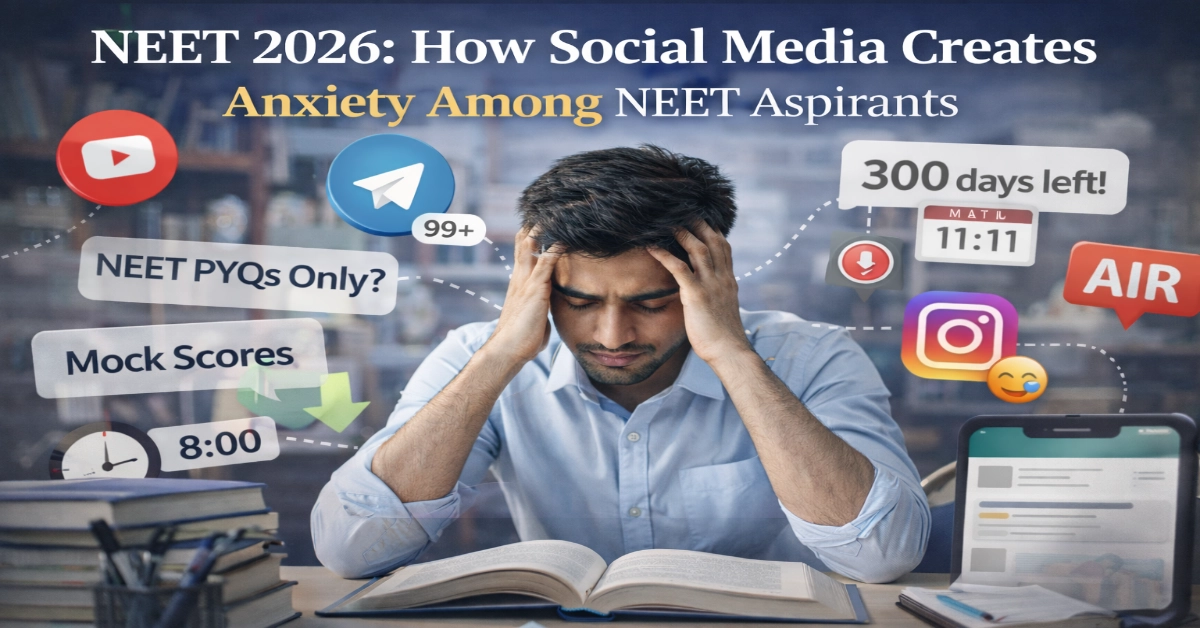
NEET 2026: With increasing technology, social media has become an integral part of the daily routine of each one of us. During NEET Exams, Platforms like YouTube, Instagram, Telegram, and WhatsApp constantly deliver study tips, strategies, and motivational content. While some of this information is useful, excessive exposure is increasingly becoming a source of anxiety, confusion, and self-doubt among NEET aspirants.
The Pressure of Constant Comparison
Social media presents an illusion that everyone else is studying harder and performing better. Aspirants are regularly exposed to screenshots of mock scores, long study-hour claims, and “productive day” posts. Over time, this creates mental pressure and unrealistic expectations.
Common psychological effects:

- Comparing progress with strangers online
- Feeling left behind despite consistent effort
- Loss of confidence and motivation
Most aspirants forget that social media shows highlights, not reality.
Read Also: NEET and Mental Health: The Hidden Struggle Behind the Dream
 Join NEET News 2026
 Information Overload and Strategy Confusion
NEET aspirants are flooded with conflicting advice from multiple toppers and educators. Some coaching platforms suggest different notes and books, while others push daily mock tests. Various strategies, toppers’ study routine, and advanced materials all these create chaos and panic.
This leads to:
- Frequent changes in study strategy
- Difficulty trusting one’s own preparation plan
- Wasted time collecting various materials instead of studying
For NEET 2026 aspirants, this confusion often becomes a bigger problem than the syllabus itself.
Fear-Based Content and Artificial Urgency
Many social media pages rely on fear to grab attention. Countdown posts and alarming headlines create panic rather than productivity. Aspirants start associating NEET preparation with stress instead of structured learning.
Typical outcomes include:
- Anxiety due to constant deadline reminders
- Guilt for not studying “enough”
- Reduced ability to study calmly
Such content harms mental stability, especially during long preparation cycles.
Social Validation and Self-Worth Issues
Over time, aspirants begin to judge their seriousness based on online presence. Seeing others’ post daily study updates can create a sense of worthlessness among those who prefer studying quietly.
This results in:
- Studying for social approval rather than understanding
- Feeling guilty while taking breaks
- Linking self-worth to productivity posts
This emotional dependence weakens confidence and focus.
Reduced Focus and Attention Span
Short-form videos train the brain for quick rewards. This makes it harder to sit with lengthy NCERT chapters or complex numerical problems.
Common academic impacts:
- Frequent phone-checking during study sessions
- Difficulty concentrating for long hours
- Mental fatigue and poor retention
Over time, this affects both preparation quality and exam performance.
How NEET Toppers Handle Social Media
Many NEET toppers limit social media during critical phases of preparation. They use only those platforms that are needed to stay updated and stay away from non-relevant, unnecessary content.
Their approach usually involves:
- Following only a few trusted sources
- Avoiding score comparisons and comment sections
They treat social media as a resource, not a measure of success.
What NEET 2026 Aspirants Can Do
Social media does not need to be completely deleted, but it must be controlled. Conscious usage can significantly reduce anxiety and improve focus.
Practical steps to follow:
- Set fixed time limits for social media apps
- Unfollow those “12-hour study” accounts
- Track personal progress instead of online trends
Final Thoughts
For NEET 2026 aspirants, social media can either support preparation or silently damage mental health. Anxiety often grows not because of the syllabus, but due to constant comparison with others.
Refer to the NCERT textbooks during the preparation, and practice questions from PYQs or Mocks to strengthen the concept. Do not run after materials.
NEET rewards consistency, clarity, and calm thinking. Protecting mental space from unnecessary pressure may be one of the smartest preparation strategies. Sometimes, the most productive step forward is simply focusing on yourself.
