
NEET UG qualified candidates filling choices for AYUSH counselling can now check their realistic college and branch chances using the free AYUSH College Predictor on Edufever. The tool matches a candidate’s NEET score, rank, category, state and quota against AYUSH seat data and returns a stream-wise and college-wise probability report – before choices are locked on September 13.
👉 AYUSH College Predictor 2026
AACCC Round 1 registration closes on September 13, 2026, at 2:00 PM, and choice filling and locking runs from September 9 to September 13. The Round 1 seat allotment result is due on September 16.
How the AYUSH College Predictor works: step by step
Step 1 – Open the tool: Go to Ayush College Predictor. No login or account creation is needed to start.

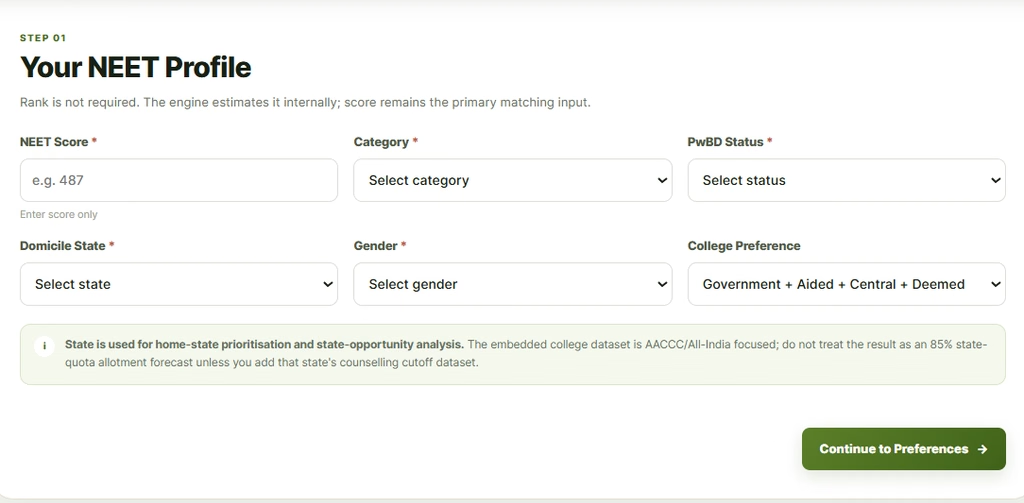
Step 2 – Enter your NEET profile: Fill in your NEET UG 2026 score and All India Rank, your category (General/EWS/OBC/SC/ST), home state, gender, and the quota you are applying under – All India Quota or state quota. These six inputs decide the entire prediction, so enter them exactly as they appear on your NTA scorecard.
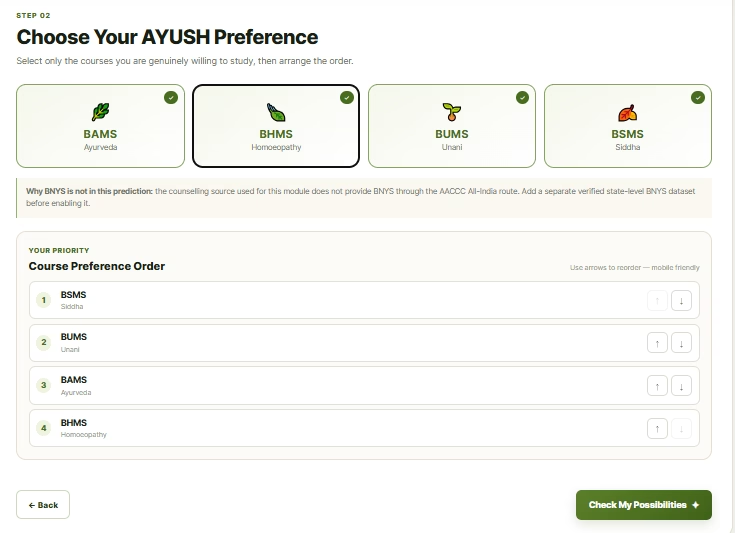
Step 3 – Choose your course preference: Select which AYUSH stream you want assessed — BAMS (Ayurveda), BHMS (Homoeopathy), BUMS (Unani) or BSMS (Siddha). You can ask for a combined view if you are open to more than one system of medicine, which is usually the better approach at borderline ranks.
Step 4 – Run the analysis: The tool compares your rank and category against previous cutoff and closing-rank patterns for AIQ and state quota seats, and works out which colleges fall in your reachable range.
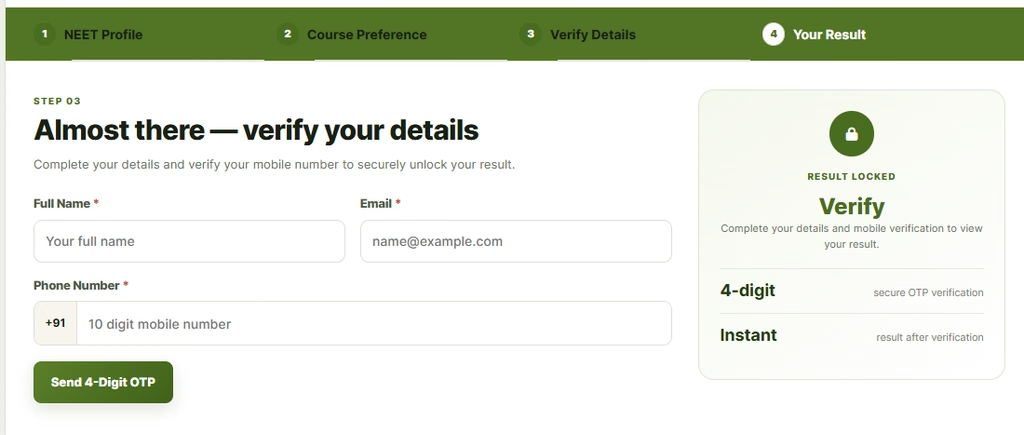
Step 5 – Verify your contact details: Enter your name, email and mobile number and confirm the OTP sent to you. This step unlocks the full report.
Step 6 – Read your report and build your choice list: Use the output to order your AACCC choice list – high-chance colleges first as targets, mid-range next, safe options at the bottom – then lock before the deadline.
 Join NEET News 2026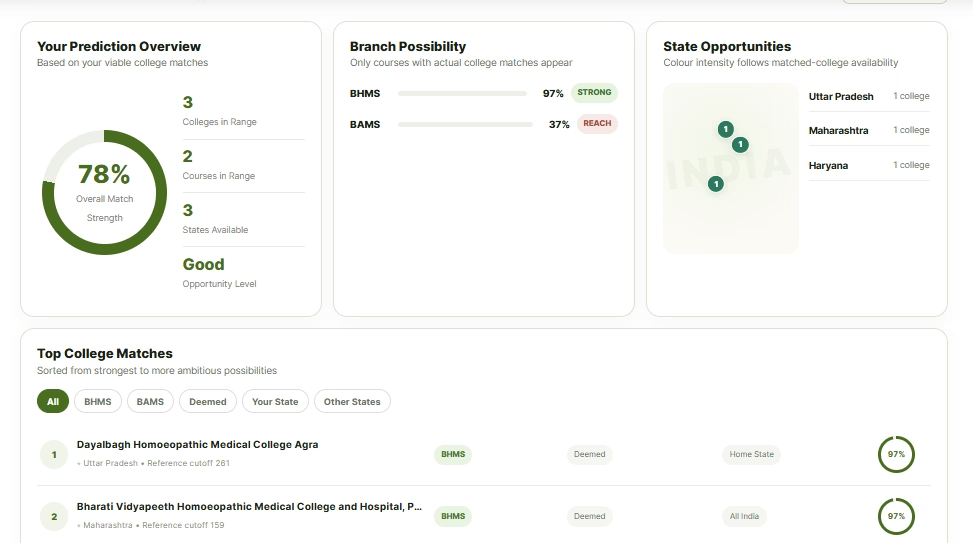
What the prediction report shows
- Profile summary and strength – where your rank sits in the overall AYUSH applicant pool.
- Branch-wise chances – separate probability for BAMS, BHMS, BUMS and BSMS, since cutoffs differ sharply between them.
- Top college matches – the institutes most likely to come within your range.
- Match distribution – how your options split across high, moderate and low probability.
- State opportunities – where your domicile and state quota give you an edge.
- Government vs private split – how many of your matches are government seats versus private or deemed institutes, which directly affects fee planning.
- Alternative pathways – for candidates whose score falls short of a strong AYUSH match in India, including MBBS abroad options.
What the tool covers
The predictor is built around both counselling routes a candidate can take. On the central side, it covers AACCC All India Quota seats – the 15 per cent AIQ pool in government and government-aided AYUSH colleges, along with Central Universities, National Institutes and Deemed Universities where all relevant UG seats fall under AACCC. On the state side, it factors in state quota seats, which is where the large majority of AYUSH seats actually sit and where domicile changes the answer completely.
👉 AYUSH College Predictor 2026
All four undergraduate AYUSH streams are covered: BAMS, BHMS, BUMS and BSMS. Because the tool reads category, gender and quota separately, two candidates with an identical rank can get different college lists – which is exactly how the real allotment works.
Who should use it
- Candidates about to lock AACCC Round 1 choices, who need to know the order in which colleges should appear.
- Students weighing AIQ against state quota, unsure which route gives them a better seat.
- Borderline scorers deciding whether BAMS is realistic or whether BHMS, BUMS or BSMS is the safer target.
- Candidates planning for Rounds 2 and 3, who want a benchmark before the next seat matrix is published.
- Parents comparing fee exposure, using the government versus private split before committing to a private or deemed institute.
Common mistakes the report helps avoid
Every cycle produces the same errors. Candidates fill too few choices and go unallotted despite a workable rank. They order the list by reputation instead of reachability, so the entire preference set sits above their range. They ignore streams they had not considered, even when a Unani or Siddha seat in a government college is within reach. And they overlook the fee gap until after allotment, when a private seat is already locked.
The predictor addresses each of these directly by separating the list into reachable, stretch and safe tiers rather than returning a single college name.
👉 AYUSH College Predictor 2026
What it cannot do
The tool works on previous-year cutoff and closing-rank patterns. It cannot account for this year’s live seat matrix changes, new colleges added mid-cycle, seat surrender, or category conversion in later rounds. Reserved seats left vacant after Round 3 are converted to Open/Unreserved before the stray vacancy round, which shifts closing ranks in ways no predictor can anticipate.
Treat the output as a planning aid, not a guarantee. Cross-check the official seat matrix and closing ranks on aaccc.gov.in before locking choices.
Key AACCC Round 1 dates
| Activity | Date |
|---|---|
| Activity | Date |
| Registration and payment | Till September 13, 2026 (2:00 PM) |
| Choice filling and locking | September 9 – 13, 2026 |
| Round 1 seat allotment result | September 16, 2026 |
| Reporting at allotted college | September 17 – 23, 2026 |
The 2026 cycle runs across four rounds plus a stray vacancy round, so candidates who miss out in Round 1 retain further opportunities.
👉 AYUSH College Predictor 2026
Frequently Asked Questions
Is the AYUSH College Predictor free?
Yes. The prediction report is generated free of cost after OTP verification of contact details.
Which courses does it predict?
BAMS, BHMS, BUMS and BSMS.
Does it cover state quota or only All India Quota?
Both. AIQ seats under AACCC and state quota seats are included.
Can I use it if I have not registered on aaccc.gov.in yet?
Yes. The predictor is independent of AACCC registration, though registration itself must be completed on the official portal by September 13.
How accurate is the prediction?
It is indicative, based on past closing ranks and category trends. Actual allotment depends on this year’s seat matrix, the number of applicants and choice-filling behaviour.
With choice locking closing on September 13, candidates are advised to run their profile through the AYUSH College Predictor and finalise their preference order well before the deadline.
NEET UG Counselling Guides 2026
State-wise MBBS/BDS Counselling Guide 2026
State-wise counselling & admission guidance
MCC NEET UG Counselling Guide 2026
MCC counselling, choice filling & admission planning
AACCC AYUSH NEET Counselling Guide 2026
AYUSH counselling & admission guidance