
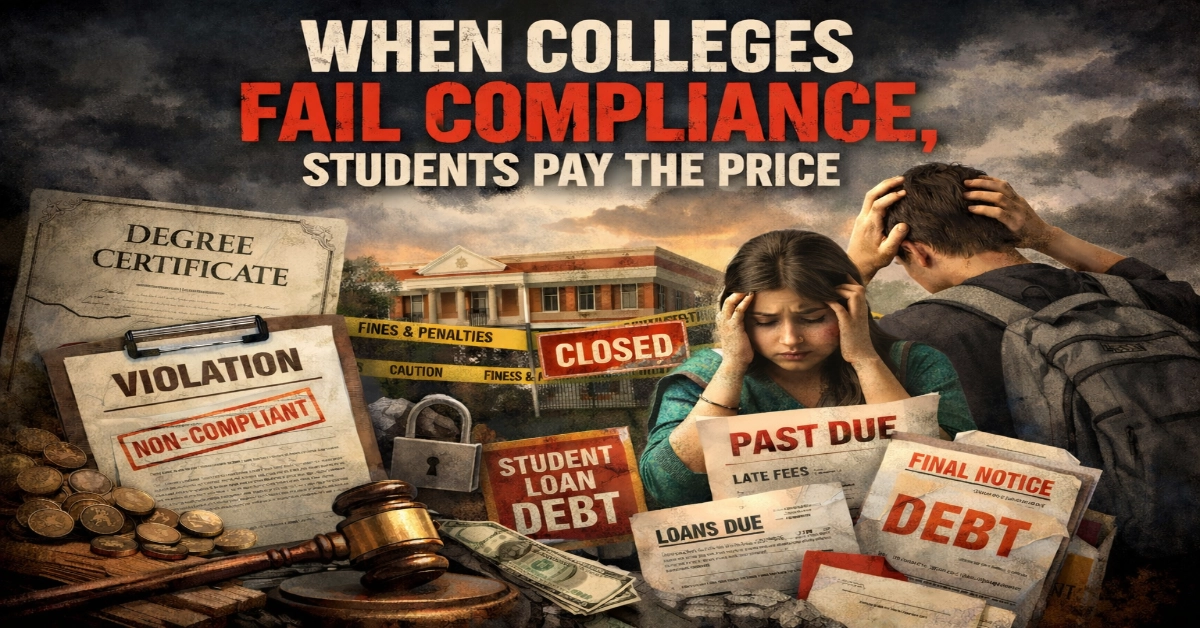
NMC: Every year, thousands of medical aspirants work relentlessly to secure a seat through exams like NEET. For them, getting admission into a medical college feels like the end of a long struggle. However, what many students don’t realize is that their journey can suddenly be disrupted not because of their own mistakes, but due to institutions failing to follow regulatory norms. When colleges fall short on compliance, it is often the students who suffer the most.
Medical colleges are required to meet strict standards set by regulatory bodies such as the National Medical Commission (NMC). These include adequate faculty, infrastructure, hospital facilities, patient load, and academic resources. When a college fails to maintain these standards, authorities may reduce seats, withhold permissions, or even withdraw course approvals. While such actions are meant to uphold education quality, their impact on students can be severe.
How Non-Compliance Hurts Students
When a college is found non-compliant, students face consequences that are often sudden and stressful:

- Admissions get cancelled or frozen midway through the academic process
- Students are forced to relocate to other colleges, sometimes in different states
- Academic continuity suffers, with changes in faculty, curriculum pace, and evaluation systems
- Financial losses increase due to fresh admissions, travel, and accommodation costs
For many students, especially those from middle-class or rural backgrounds, such disruptions can be emotionally and financially overwhelming.
Why Students End Up Paying the Price
Students usually enter colleges assuming that approvals granted by authorities are final and reliable. However, inspections often happen after admissions, and deficiencies are identified later. By then, students are already enrolled and deeply invested in their education.
 Join NEET News 2026
 Key reasons students are affected include:
- Colleges overpromise infrastructure or faculty to gain approvals
- Regulatory actions are taken after admissions are completed
- Students have no role or control over institutional compliance
- Information about risks is often not transparently shared
As a result, students become collateral damage in a system meant to regulate institutions, not punish aspirants.
The Emotional and Mental Impact
Beyond academics, the uncertainty caused by compliance issues takes a toll on mental health:
- Anxiety over future of the degree
- Fear of losing a year or seat
- Pressure from family and society
- Loss of motivation after years of hard work
For many aspirants, this stress can be more damaging than the exam itself.
What Can Be Done to Protect Students
While regulatory oversight is necessary, student protection must be strengthened:
- Final inspections before counselling, not after admissions
- Clear public disclosure of a college’s compliance status
- Student-friendly transition policies if seats are withdrawn
- Accountability for institutions, not just penalties on paper
Students deserve stability and clarity after earning their seats through merit.
A Reality Aspirants Must Be Aware Of
In a highly competitive system like NEET, securing a seat is just the first step. Aspirants must also stay informed about college approvals, inspection status, and regulatory updates. While students cannot control institutional failures, awareness can reduce risk.
In Conclusion:
When colleges fail to meet standards, corrective action is necessary, but it should not come at the cost of students’ futures. A system designed to protect education quality must also protect the dreams, time, and mental well-being of aspirants. Until then, students will continue to pay the price for mistakes they never made.
Read Also: NMC Withdraws MBBS Approval for Shri Mata Vaishno Devi Medical College, J&K
