

Direct Admission in MBBS in India:MBBS (Bachelor of Medicine and Bachelor of Surgery) is one of the most sought-after medical courses in India. However, securing admission can be challenging due to the limited number of seats available. For students who are unable to gain entry through the standard admission process, direct admission to MBBS can serve as a viable alternative. This guide provides a clear overview of how the direct admission process works in India.
Securing an MBBS seat in India is highly competitive, with more than 18 lakh students competing for a limited number of seats in top medical colleges. Although direct admission to MBBS is generally not permitted, some students can gain entry through management or institutional quota seats.
This article will help you understand how admission through these quotas works, along with its advantages and disadvantages.
[Page Index]
MBBS Quick Facts
The following is a summary of the MBBS course. Let’s take a look.
| Particulars | Description |
| MBBS Course Duration | 5.5 Years (Including Internship) |
| Eligibility | 10+2 with 50% marks (40% for reserved categories) + NEET qualification |
| Admission Procedure | NEET-based counselling by MCC and State Authorities |
| Average Fees | Govt: ₹10,000 – ₹1,00,000/yearPrivate: ₹7,00,000 – ₹25,00,000/year |
| Average Salary | ₹3 LPA – ₹8 LPA (Freshers) |
| Career Opportunities | Physician, Doctor, Endocrinologist, Pathologist, Neurologist, Cardiologist, Gynaecologist |
| Top Recruiters | Fortis Healthcare, Medanta, Global Hospitals, Dr. Lal PathLabs |
What is Direct Admission to MBBS in India?
Direct admission to MBBS through management and institutional quotas provides an alternative pathway for students who may not secure a high rank in NEET, as a certain percentage of seats in private and deemed medical colleges are reserved under these quotas; however, NEET qualification remains mandatory, and admission is generally based on the candidate’s performance in Class 12 (or equivalent) along with their NEET score, while some institutions may also apply additional selection criteria, making this route a viable option for students seeking to pursue MBBS despite the intense competition in the regular admission process.
Direct Admission in MBBS in India: Type
Students aspiring to pursue MBBS in India must appear for the NEET-UG examination after completing their 10+2 education, followed by the counselling process conducted by the Medical Counselling Committee (MCC). However, those who are unable to secure a seat through the regular counselling process can still consider alternative options such as the Management Quota and Institutional Quota.
Management Quota: These seats are reserved in private medical colleges for admission under specific quotas, offering an alternative route for students who may not meet the standard cut-off or merit criteria but still satisfy the basic eligibility requirements for MBBS. While NEET qualification remains mandatory, the selection process under these quotas is relatively more flexible.
Institutional Quota: These seats are administered by the respective medical colleges, which have the authority to fill them based on their own admission policies and criteria, sometimes giving preference to students from specific regions, backgrounds, or institutional affiliations. While the NEET qualification remains mandatory, the selection process is conducted directly by the college.
Advantages of Direct Admission to MBBS
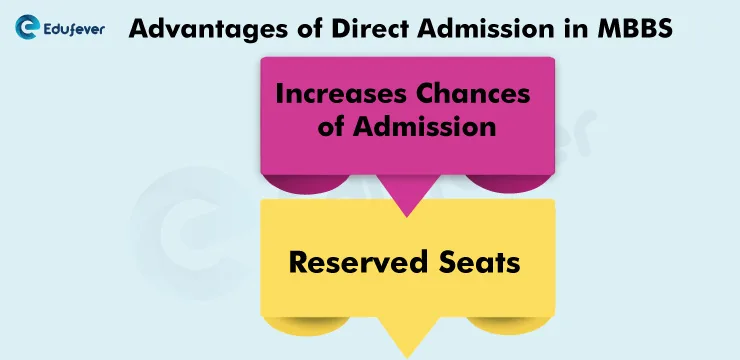
- Higher Admission Chances: Admissions through management and institutional quotas provide students with an increased opportunity to secure an MBBS seat, with selection often considering their Class 12 performance along with their entrance exam results.
- Reserved Seats: All MBBS seats, including those under management and institutional quotas, require candidates to qualify for NEET; however, these quotas may offer an opportunity to students with lower scores compared to the general cut-off.
Disadvantages of Direct Admission in MBBS
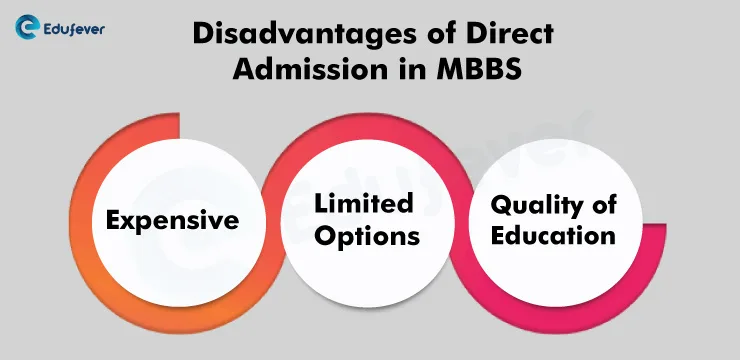
- Expensive: Direct MBBS admission through management or institutional quotas typically involves significantly higher fees compared to regular NEET-based admissions, as colleges charge a premium for these reserved seats.
- Limited Options: Only a limited number of colleges offer admission under these quotas, which can restrict students’ choices and reduce the chances of securing a seat in their preferred institution.
- Quality of Education: Colleges offering admission through these quotas may not always match the quality standards of top institutions filled through NEET-based counselling, so students need to research thoroughly before making a decision.
How to get direct admission to MBBS?
- Candidates must pass Class 12 with Physics, Chemistry, Biology, and English.
- A minimum of 50% marks in PCB is required for General category.
- Applicants can be Indian citizens, NRIs, OCIs, PIOs, or foreign nationals.
- NEET-UG is mandatory for MBBS admission in India.
- Direct admission to MBBS without qualifying for NEET is not allowed in India.
Process of Direct Admission to MBBS in India
Direct MBBS Admission Process:
- Research Colleges: Find private colleges offering direct admission. Check their reputation, fees, and facilities.
- Counselling: Participate in NEET UG counselling for 15% All India Quota and 85% state quota seats based on your NEET score.
- Apply: Submit the application with required documents like mark sheets and ID proof.
- Pay Fees: Pay the admission fees, which are usually higher for direct admission.
- Confirm Admission: The college confirms admission after fee payment.
Management Quota Admission Procedure
- Qualify the NEET UG exam.
- Wait for the NEET 2025 results announced by NTA.
- Register on the MCC website for deemed universities if interested.
- Register for counselling in your preferred state.
- Some states may ask for a refundable security deposit (₹1-2 lakh).
- Verify documents (may not be required in some states).
- Fill and lock your college choices.
- There are two rounds of online counselling.
- If no seat is allotted, attend the MOP-UP round.
- Vacant seats after counselling are filled in the MOP-UP and stray vacancy rounds.
Management Quota Eligibility Criteria
The following are the eligibility criteria for management quota for admission to MBBS:
| Particulars | Description |
|---|---|
| Age Limit | The minimum age limit is 17 years. |
| Qualification | 10+2 in the science stream including Physics, Chemistry, Biology, and English. |
| Qualifying Marks | Candidates must score a minimum of 50% aggregate marks. |
Documents Required
The following are the documents required for the management quota:
- 12th marks card
- 12th pass certificate
- 10th marks card
- Transfer Certificate
- Conduct Certificate
- Migration Certificate
- NEET Scorecard
- Community certificate, if applicable
- Income certificate, if applicable
- Aadhar Card and Number
- Passport size photograph
NEET UG Counselling Process
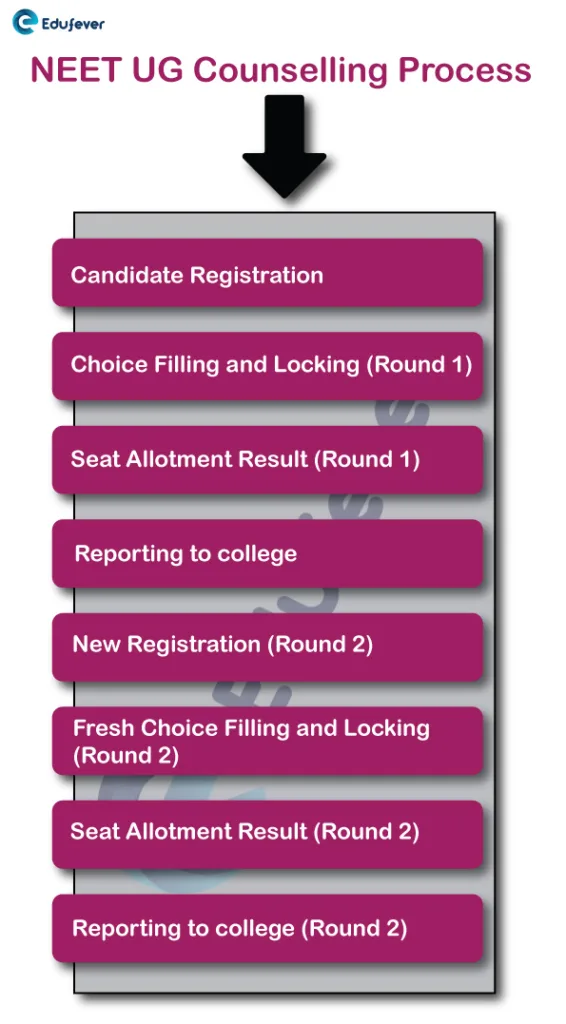
Candidates applying for medical colleges in India must register for the AIQ NEET counselling. Counselling of NEET for All India Quota will be conducted in two rounds in online mode. The counselling will consist of these steps.
Top Deemed Private Medical Colleges in India
The following are the top deemed private medical colleges in India, to check the college’s seat, and fees structure click on the respective college link.
Read Also:
